European Approved Compact Excavators: A Handbook to Compliance
European Approved Compact Excavators: A Handbook to Compliance
Blog Article
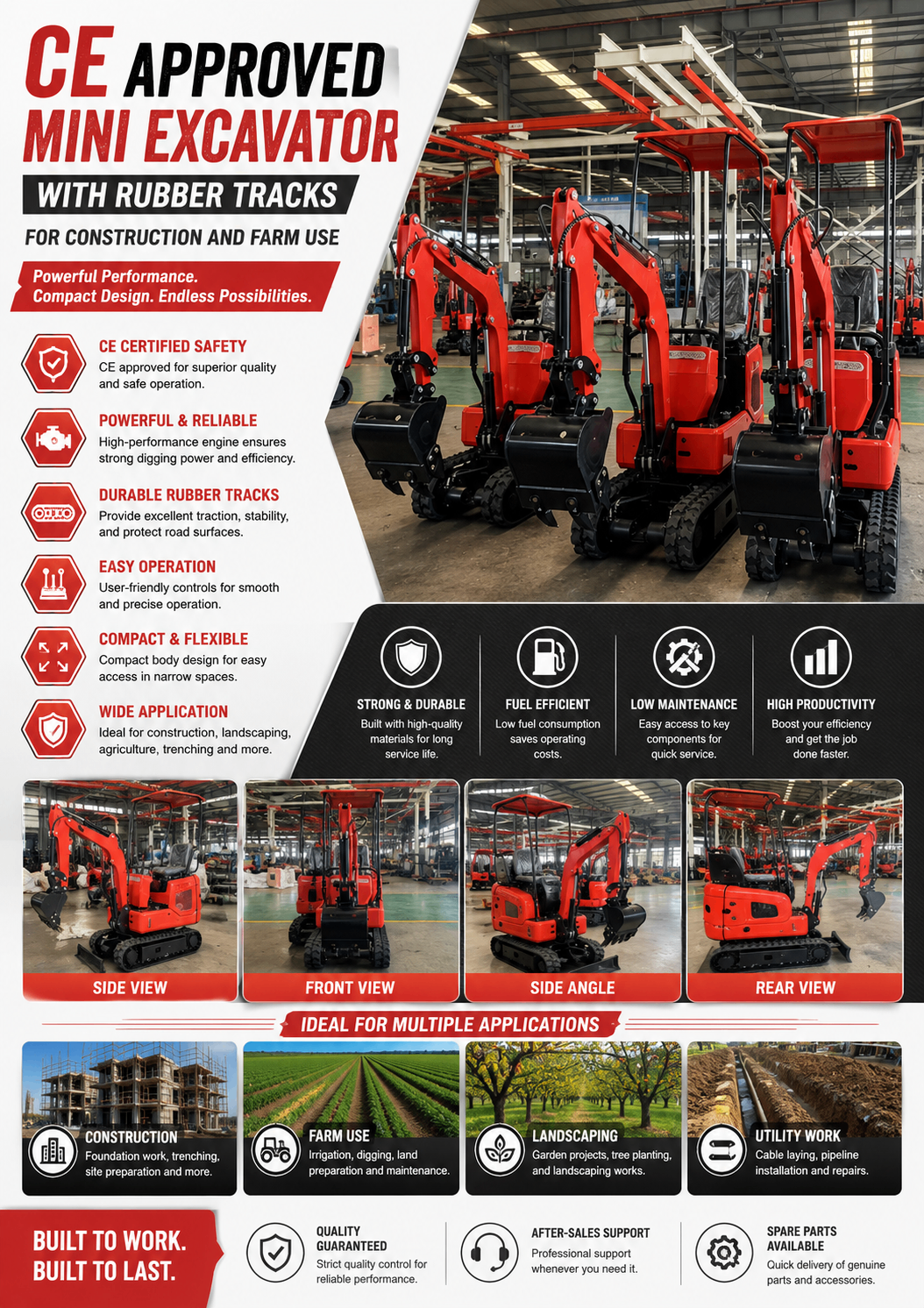
Ensuring your small excavator meets EU accreditation requirements is vital for operation within Europe. This overview explains the key aspects of EU approval for mini excavators, including standards related to safety, machinery assessment, and records. Understanding the requirements allows companies to correctly use their vehicles and circumvent potential penalties.
Specialized Track Mini Machines: Excellent Traction for Tough Terrain
Mini diggers equipped with rubber tracks are transforming how contractors handle projects in rough environments. Unlike traditional tire-equipped models, these adaptable machines provide superior grip on slippery surfaces like sand, ice, and steep slopes. This greater stability allows operators to execute tasks safely and quickly, lessening downtime and maximizing performance. The flexible nature of composite tracks also reduces ground impact, protecting delicate surfaces and reducing environmental disturbance.
Small Diggers: Significant Output in Confined Construction Areas
These capable reduced-size excavators offer a considerable answer for jobs where conventional equipment cannot maneuver. Their reduced footprint permits access to difficult areas, like basement infrastructure or within established facilities. Despite their size, they feature impressive digging force and finesse, allowing them ideal for a wide scope of building uses. Ultimately, mini excavators represent a intelligent investment for contractors facing the difficulties of confined job-sites.
Small Excavators for Farms : Flexibility and Productivity in Farming Jobs
Modern farming operations often require machinery that can handle a variety of demanding jobs. Mini excavators are quickly becoming invaluable assets for farmers , offering exceptional flexibility and performance across a diverse array of agricultural operations . From excavating for irrigation networks and runoff to shifting ground for building barriers or platforms, these devices provide a capable solution. They even excel at clearing land for cultivation, leveling acreage , and processing resources with ease . Their compact dimensions allows them to work in restricted locations that larger vehicles simply cannot navigate.
- Digging for Irrigation
- Shifting Soil
- Removing Land for Planting
Picking the Appropriate Mini Excavator for Site vs. Farm Uses
When choosing a mini digger , it's vital to recognize the crucial distinctions between site projects and rural tasks . Building sites often require greater force, precision , and the ability to function in confined locations. As a result, a robust model with a wide range of implements might be best . Conversely , farms frequently involve less digging depths , routine terrain grading , and the necessity for small equipment to move through fields . Finally , detailed here assessment of the planned workload is essential for securing the optimal choice .
- Evaluate trenching depths .
- Determine the location constraints .
- Review the needed implements.
- Consider transportation difficulties .
{CE Labeling & Mini Excavators : What Operators Must to Be Aware Of
Ensuring your {mini digger is compliant relevant European directives is crucial, and that's where {CE marking comes into play . This identification demonstrates that the equipment has been assessed and meets performance requirements, allowing free movement within the European Economic Area . {For hirers of these machines, understanding CE marking is essential . It isn't simply about having a sticker on the machine ; it represents a assessment of manufacturing and performance .
- Check the presence of the CE label .
- Consult the conformity document – this details the requirements the machine meets.
- Bear in mind that CE labeling is the maker's responsibility – even users must be aware of its significance.